The Ticking Grease Clock
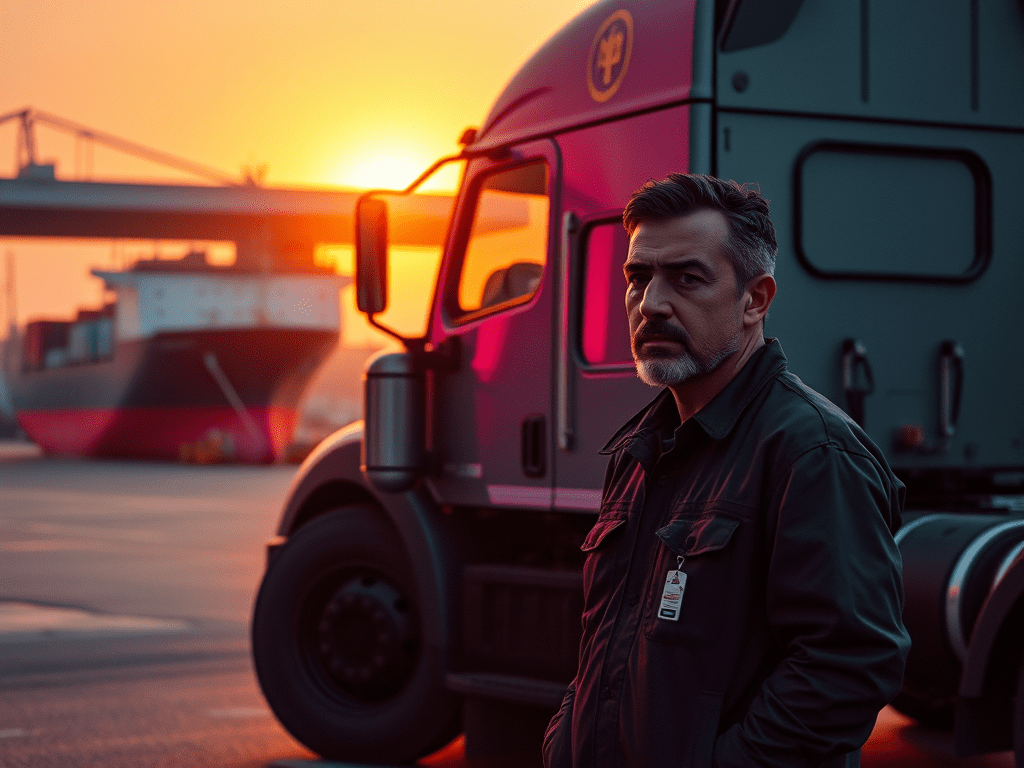
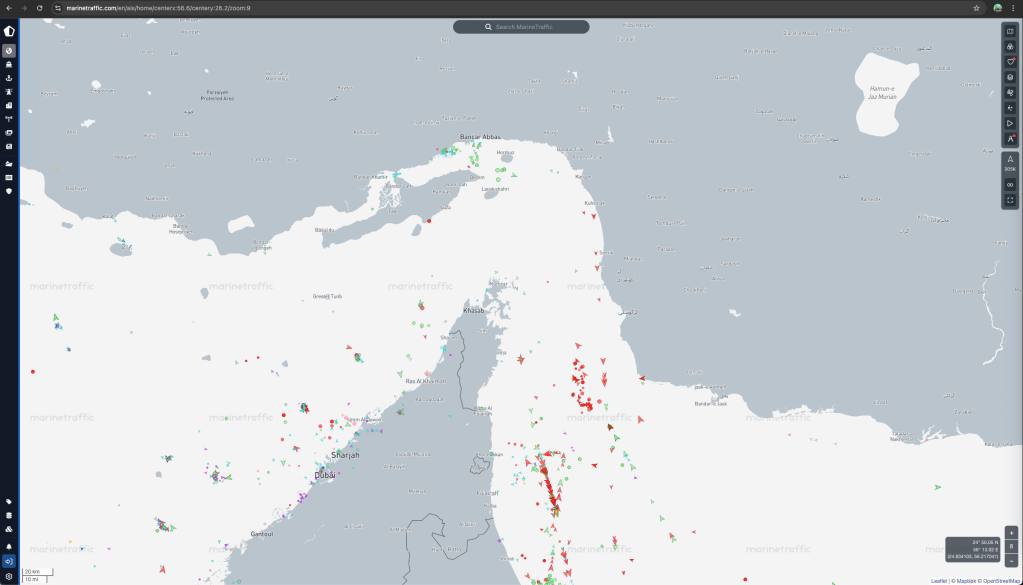
New Zealand currently has a little less than a month of diesel supply stored in the country and about 20 more days of supply in transit. Fuel that is in transit is not guaranteed especially when a Force Majeure situation arises like the Iran war in this case. New Zealand does not have an oil refinery since 2022 when it shut its only one at Marsden Point. Without a refinery the country depends on import of refined oil. Currently 50% of refined oil that includes diesel is imported from South Korea and the remaining from Japan and Singapore. These countries rely on Saudi Arabia and UAE for their crude oil supplies that pass through the now contested waters of the Strait of Hormuz.
Photo below: Live snapshot of shipping vessels passing through the Strait of Hormuz on Friday, 13 March (Courtesy: marinetraffic.com)
Can We Grease Proof Our Economy?
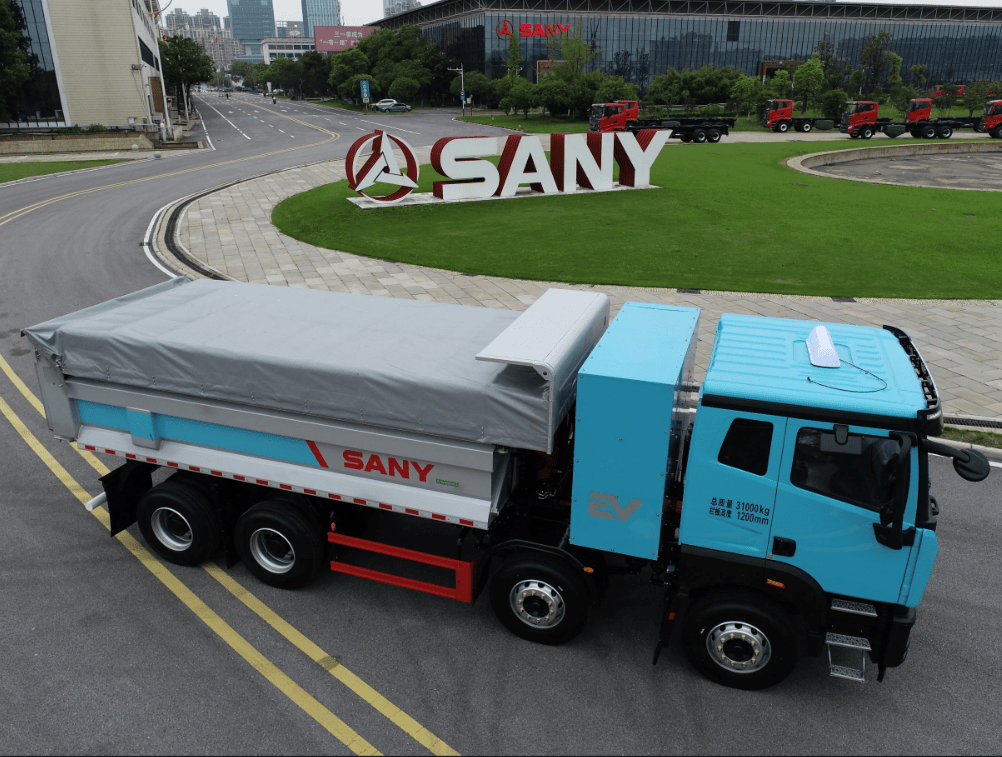
In December 2025 alone, China registered 45,300 new energy heavy-duty trucks which was 53.89% of the total number of heavy-duty trucks sold the same month. In comparison, New Zealand’s has only 1,324 alternate energy heavy-duty trucks operating currently that make up a mere 0.6% of the total fleet. The remaining are powered by diesel. What this means is that, in case of a real doomsday scenario, which is not impossible considering the seriousness of reports like this, and a multi-party conflict converting the Strait of Hormuz into a battle zone, it will be a while before any ship can make it out of there. This would put 99.4% of our heavy duty trucks and tractors out of work impacting agriculture, retail and freight. However, in a similar scenario China would still operate its truck fleet at over 50% capacity.
Photo below: Chinese fully electric 31 Tonne dump truck developed by SANY
What Happens When Doomsday Arrives?
Many reports indicate that even if the oil supplies were to be strained for a prolonged period history has proven that oil prices can soar only up to a point where demand starts to lower thereby bringing the price down again. This does not mean that the pain at the pump will not be felt by New Zealanders if the current conflict continues for months. Theoretically though, if we run out of every drop of oil – here is what you will witness:
Supermarket and retail shortages – since 93% of all goods in NZ move by trucks which almost entirely run on diesel, an immediate impact would be seen on the supply of fresh produce, milk and meat products. Supermarkets here operate on ‘Just-in-time’ replenishment cycle which means a single missed delivery would make shelves empty by the afternoon.
Panic buying – historically there have been instances of panic buying, something we witnessed during the first COVID lockdown. Usually items like toilet papers and canned food are mostly wiped off the supermarket shelves first in such situations.
Export backlogs – Dairy and meat products that are New Zealand’s main export products need continuous transport to the ports. Any disruptions in the service of refrigerated trucks would be harmful for these perishable goods and can cost millions.
Devaluation of currency – Oil price hikes have historically strengthened the US Dollar thereby weakening the New Zealand Dollar that usually has a negative impact on the economy. A weak local currency makes imports costlier and fuel being a major imported commodity would become even more dearer at the pump.
Inflation and weak economic growth – New Zealand has been making a slow recovery from a post-COVID recession and oil shocks can stunt growth and make recovery painfully slow. There will be more pain felt at the supermarket and while paying utility bills.
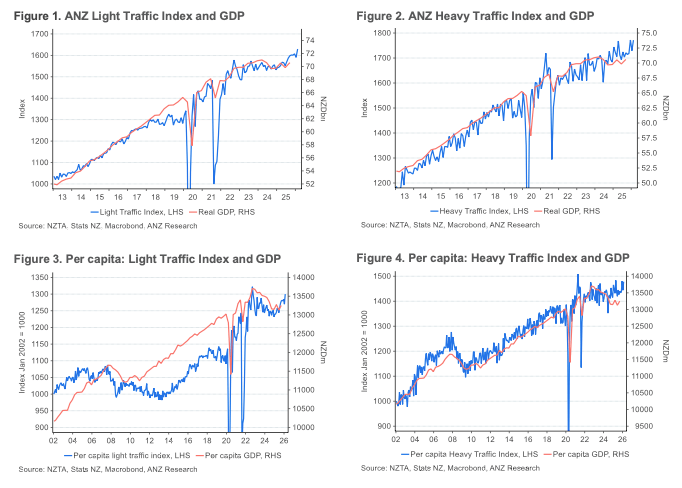
Below graph: Data from ANZ Truckometer that correlates heavy vehicle data to production GDP in real time
Can Oil Shocks Be Avoided By Diversification?
The recent conflicts in Ukraine and Iran have taught countries a lesson or two about the importance of diversifying the energy basket for a country’s crucial oil and gas purchases. In 2022, with the Russian invasion of Ukraine, Europeans who were solely dependent on Russian oil and gas realised they needed to create alternative sources of energy and during the more recent conflict between Iran, Israel and the United States countries have started to feel the need to have oil and gas suppliers outside the Gulf region.
But, diversifying can also mean choosing completely different sources of energy like China has done. In 2025, Chinese battery maker CATL aggressively invested in battery swap technology for heavy vehicles and China is seeing a fast transition from diesel to electricity in its heavy commercial truck fleet. This has been possible due to government backing and policy making that would accelerate the growth of the industry.
Is New Zealand Choosing Moving In The Opposite Direction?
New Zealand was on track to diversify its energy consumption for the transport sector which is evident from some initiatives launched between 2021 and 2023, namely the Clean Car Standard , the Emission Reduction Plan by the Ministry for the Environment and the New Zealand Energy Scenarios TIMES-NZ 2.0 which laid out goals and strategies to reduce carbon emissions and become less dependent on fossil fuels over a time frame of 10-15 years.
Graph below: Low-emission economy model projection by EECA
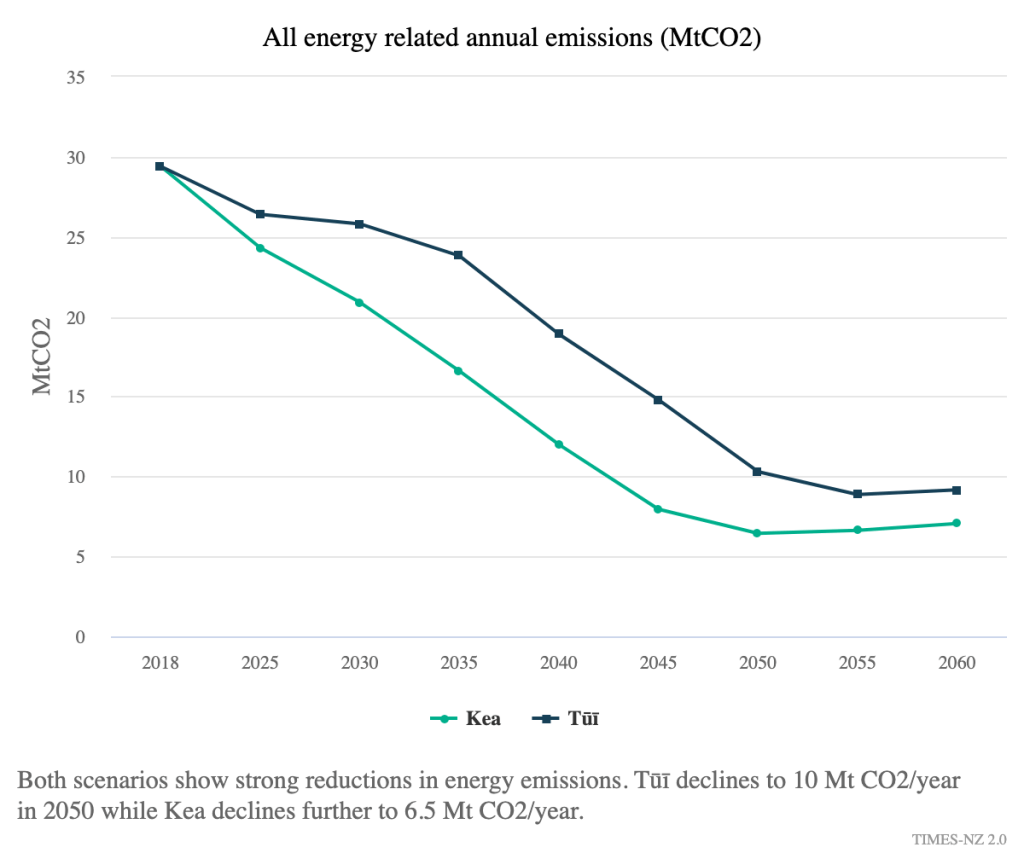
Since 2025, however, there seems to be a push to reverse these earlier initiatives. In November last year the New Zealand government announced their intention to scrap the Clean Car Standards in future and it is currently carrying out the first principles review of the CCS. Getting rid of the CCS will incentivise importers of heavy vehicle to concentrate on diesel vehicles which as we can see, in case of an oil shock can become totally vulnerable, keeping aside the emission levels. Some insiders from the trucking industry are voicing their concerns about diesel price impact on the industry. Removing the CCS will surely help businesses to acquire diesel trucks for less but if the risk of oil supply disruption is not hedged by incentivising purchase of alternate energy trucks it can turn out to be costly in the long run.
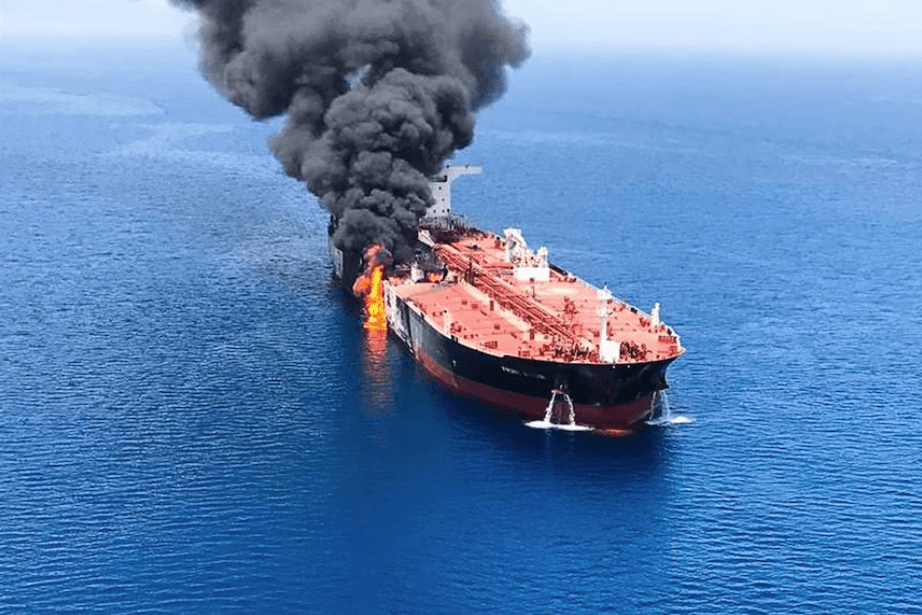
Photo below: A fuel tanker set alight by Iranian attacks in the Strait of Hormuz (API/SNA)
Sources:
RNZ: https://www.rnz.co.nz/news/top/589107/how-much-fuel-does-nz-have-and-what-happens-if-we-run-out
CNEVPOST: https://cnevpost.com/2026/01/22/china-new-energy-heavy-duty-truck-penetration-50-1st-time/
ANZ Truckometer – https://www.anz.co.nz/about-us/economic-markets-research/truckometer/#:~:text=The%20ANZ%20Truckometer%20is%20a,map%20to%20quarterly%20GDP%20growth.
SANY Global: https://www.sanyglobal.com/product/truck/dump_truck/212/
NZTA – https://nzta.govt.nz/vehicles/clean-car-programme/clean-car-standard/overview
Ministry for the Environment – https://environment.govt.nz/publications/aotearoa-new-zealands-first-emissions-reduction-plan/transport/
EECA – https://www.eeca.govt.nz/insights/data-tools/new-zealand-energy-scenarios-times-nz/


Leave a comment