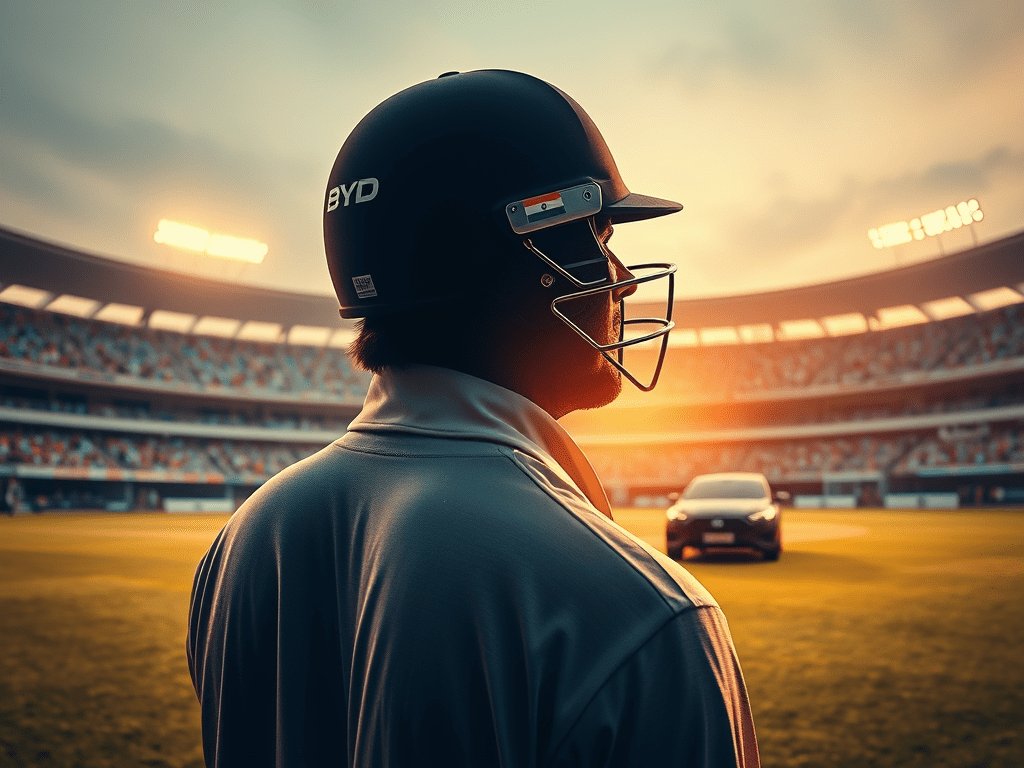
What does BYD Auto have in common with Sachin Tendulkar? I know, you must be like – how on earth can they have anything in common? One name is linked to a fast growing Chinese automotive company specialising in electric and hybrid vehicles. The other with a celebrated Indian cricket legend. If you take a step back though, you will see something in common. Both the names represent the hopes and aspirations of millions of people. Millions who have long waited to have ‘arrived’ at the world stage. Millions who have always played the underdogs. Millions who thought no one took them seriously. Until they did.
The Carmaker’s Debut Innings (2003-2005)
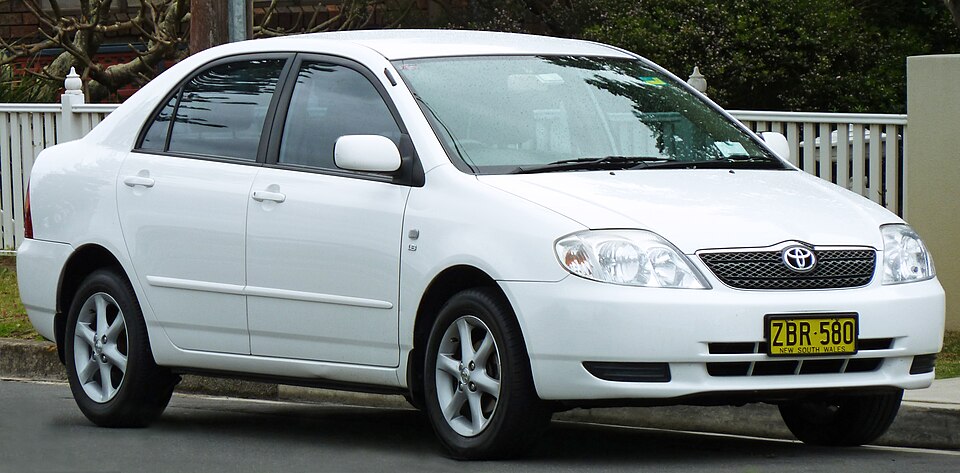
Like the small built and rather unassuming teen-aged cricketer that Sachin was when he entered cricket, BYD Auto made its entry into the automotive world in a way that nobody would guess its trajectory. A Chinese engineer Wang Chuanfu decided to buy Xi’an Qinchuan Automobile in 2003 and renamed it to BYD Auto. At that time nobody in the world was aware of any brand that the company produced. The company’s first car code named 316 was a total failure and dealers refused to buy a single unit, apparently because it was not good looking. In 2005, after many trials and tribulations BYD Auto rolled out its first car successful production car, the BYD F3. A model whose looks were highly inspired by the ninth-generation 2003 Toyota Corolla sedan, managed to sell 63,000 units in the same year, which was no mean feat. This can somewhat be compared to Tendulkar’s 119 not out score against England in 1990, just a year after his international cricket debut.
The images below are as follows – (1) 16 year old Sachin Tendulkar rubbing shoulders with cricketing greats Kapil Dev and Mohammad Azharuddin (2) 2005 BYD F3 (3) 2003 Toyota Corolla


The Automotive Slog Overs (2006-2020)
In its initial years, BYD Auto reverse engineered successful Japanese or European car models often using the option of exploring areas that are typically non-patented by car makers. This made them received some flak from a few companies but nothing resulted in any major dispute. By 2010 the company had established itself as a medium sized car manufacturer with a production capacity of 500,000 – 800,000 vehicles annually. The company had two production facilities located in Xi’an and Shenzhen – where the company’s headquarters are currently located. What came next is a series of milestones that would play an important role in creating a world class global brand that BYD is today, giving its an originality and an unique style that it desperately needed to get out of that ‘copycat’ labelling it received in its early years.
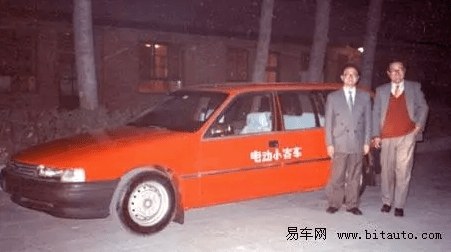
Founder Wang Chuanfu had a very clear vision of what BYD Auto would represent even before the parent company BYD acquired Xi’an Qinchuan Automobile. His company which was until then a battery manufacturer had to do something fundamentally different in order to transition into the automotive business. Without any experience or technical know-how in making combustion engines Chuanfu knew his way forward was battery electric vehicles. As early as 1997, for research purposes he acquired a very basic electric vehicle sold as the BJ6490 by the Beijing Automobile Works Company. It was a knocked down kit of a Holden Commodore VN station wagon powered by a golf-cart battery. Looking at the company’s vision for the future it is not hard to imagine how fund managers at Berkshire Hathaway decided to invest US$ 230 million into BYD in 2008. The rest as we know is history.
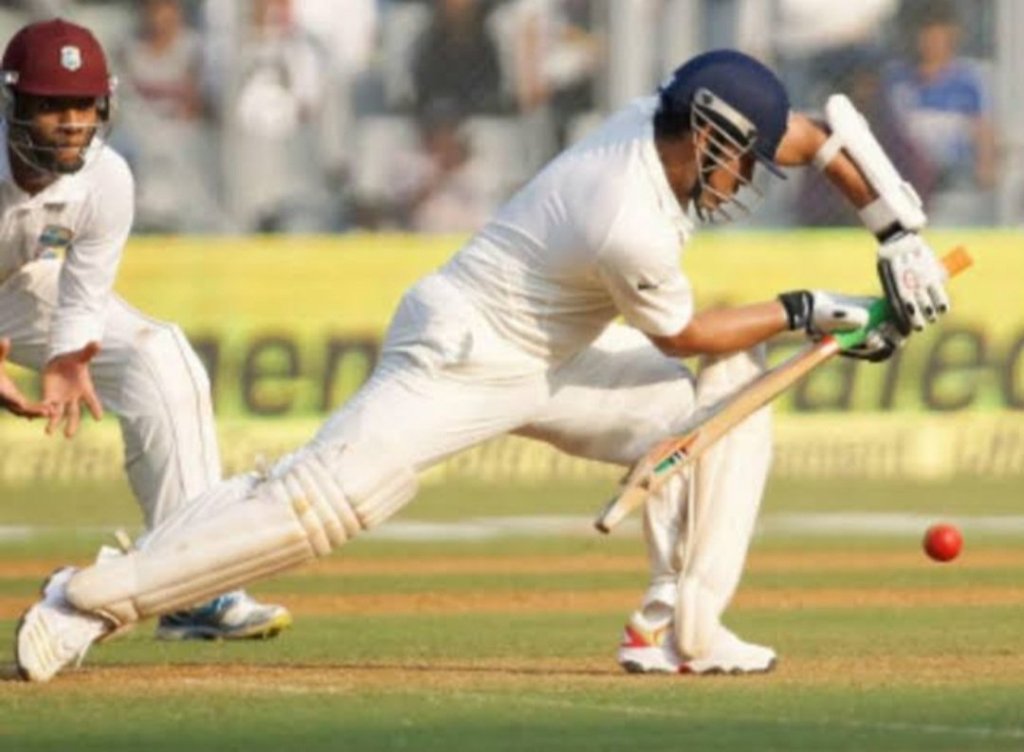
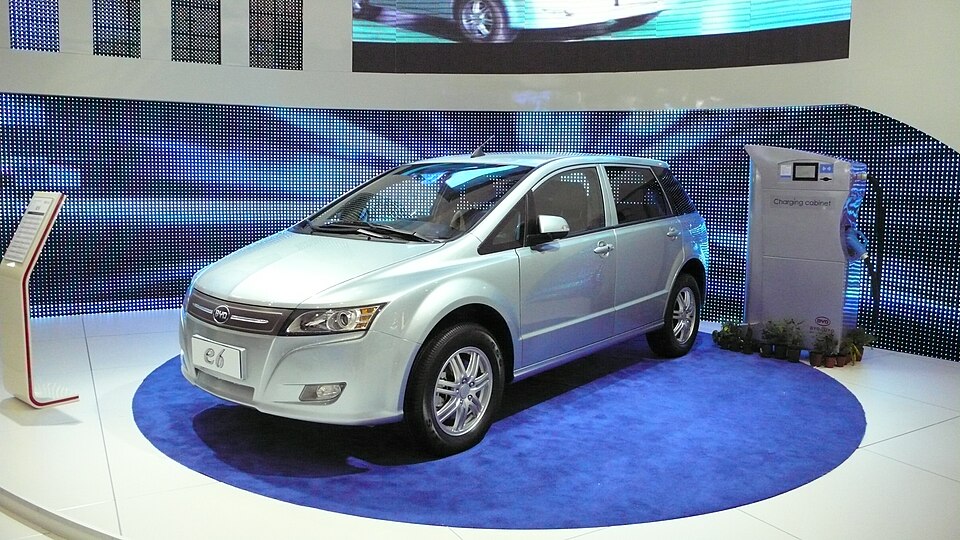
BYD Auto produced its first production ready plug-in-hybrid (PHEV) named the F3DM in 2008 followed by its first production battery electric vehicle (BEV) the next year – the e6 with a claimed range of 400 km on a single charge. The same year BYD Auto started production of its first electric bus, the K9, after receiving a large government contract in China. In 2010, BYD Auto got into a 50:50 joint venture with Mercedes-Benz Group (then Daimler AG) to develop new energy vehicles under the brand name Denza. Mercedes has since sold its stake to BYD Auto. In 2016, BYD Auto invited Alfa Romeo’s ex-design boss Wolfgang Egger to lead its design department. This led to a complete transformation of the brand. BYD is reborn as a brand that is confident, reassuring and here to stay. It is anything but flamboyant, maverick or an upstart. Like in cricket or any sport, BYD Auto has now consolidated itself in the game and is getting ready to swing the bat at any loose delivery the bowler makes.
The images below are as follows – (1) Sachin playing a well calculated, by-the-book defensive shot (2) Wang Chuanfu with the BJ6490 experimental car (3) 2010 BYD e6 showcased at the Detroit Auto Show
Demi-God of Cars in the Making? (2020 onwards)
Sachin Tendulkar’s cricket career lasted for about 24 years in which he created and broke quite a few world records. The Guinness Book of World Records entered his name in November 2013 for the category of ‘Most runs scored in an international career (male)‘. He scored 34,357 runs between 16 November 1989 and 15 November 2013. Sachin was awarded India’s highest civilian award, the Bharat Ratna (Jewel of India) in 2013 after his retirement. He is the youngest Indian and only sportsperson to receive this honour. Tendulkar’s contribution to the game has been truly fascinating and has provided inspiration to followers of the sport worldwide. In India, he is sometimes referred to as the God of Cricket. What is also fascinating is that cricket is a sport that originated in England.
For BYD Auto, its growth story runs simultaneously with China’s growth story. It brings tremendous pride, aspiration and hope to China’s millions of consumers and also the young and thirsty, students, entrepreneurs and technocrats. BYD Auto is China’s answer to Toyota, Ford, Volkswagen and Tesla. It is now a brand that can stand shoulder to shoulder with the giants of the auto industry. In 2020, BYD cars for the first time came fitted with its proprietary version of lithium iron phosphate (LFP) battery called the Blade Battery which demonstrated industry leading safety standards. BYD’s vertical integration has played a huge role in its success as BYD manufactures 70% of its car components through its subsidiary companies.
With BYD’s rapid expansion worldwide, it has for the first time achieved the number one position in battery-electric-vehicle (BEV) sales worldwide knocking off Tesla to the number two position. A report in BBC suggests the former sold 2.25 million cars in 2025 and the latter ended up with 1.64 million sales during the same period, which is quite a significant difference. Taking into account BYD’s full range of cars it is estimated to have sold 4.6 million cars globally. According to some other sources on the internet, this puts BYD almost neck-to-neck with Toyota branded cars in 2025 and leaves behind Volkswagen, Ford, Hyundai and Honda branded vehicles by a couple of million units. Toyota will be releasing releasing its annual report some time in the coming months when this can be confirmed. At this point though, it is increasingly looking like we have a new Master Blaster (as Tendulkar is referred to in cricket) in the automotive industry. Game on!
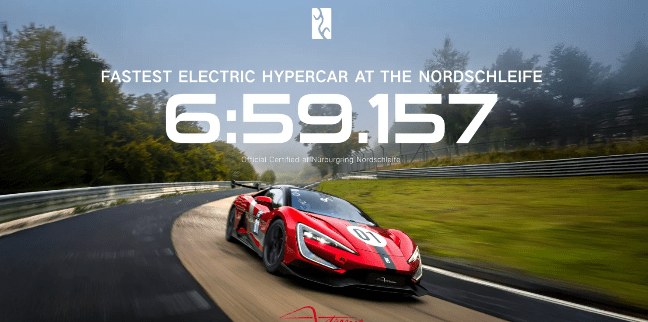
Images below are as follows: (1) Sachin Tendulkar and his jubilant team mates pose with the 2011 ICC Cricket World Cup after beating Sri Lanka (2) BYD Yangwang U9 hypercar breaks top speed and fastest lap records at Nürburgring

Sources:
BYD Global – https://www.byd.com/eu
Wikipedia – https://en.wikipedia.org/wiki/BYD_Auto
Wikipedia – https://en.wikipedia.org/wiki/Sachin_Tendulkar
BBC – https://www.bbc.com/news/articles/cj9rjwpvmpzo
China Automotive News – https://autonews.gasgoo.com/articles/news/byd-wraps-up-2025-global-sales-46-million-overseas-market-becomes-new-growth-engine-2007831963937550337
Guinness Book of World Records – https://www.guinnessworldrecords.com/world-records/115369-most-runs-scored-in-an-international-career-male


Leave a comment