
New Zealand has made another temporary adjustment to its current Clean Car Standard with this latest announcement of slashing 80% of the charges that importers and distributors paid for importing vehicles that exceeded a certain level of Carbon Dioxide emissions. The changes will come into effect from January 1, 2026 after the Land Transport (Clean Vehicle Standard) Amendment Bill (No 2) is amended. If you are trying to get your head around all these schemes and legislations (new, old or proposed) here is a summary of what has been happening so far.
The Clean Car Discount Scheme (now defunct)
This was a scheme that was in place between July 1, 2021 and March 31, 2022 offering a cash discount to the first registered person of an eligible vehicle based on its emission levels.
Between April 1, 2022 and December 31, 2023 this scheme also included a fee for vehicles emitting levels of carbon dioxide more than a set standard with the creation of New Zealand’s first Clean Vehicle Standard. Most other developed nations have had one for decades. Here is the legislation if you want to read it. I will explain how that worked in the next section.
The Clean Vehicle Standard 2022
With the introduction of this piece of legal document vehicle importers and distributors were incentivised with a system of a credit for importing low emission vehicles and a fine for importing a high emission vehicle based on their unladen weight. The standard acceptable emission for a Light vehicle (less than or equal to 1700kg) was set at 77grams/km of CO2 and for a Heavy vehicle (more than 1700kg) was set at 132g/km of CO2. A $30 credit or fee would be applied for each gram of CO2 the vehicle emits above or below the set standard. An importer would have to carefully blend the choice of vehicles in order to offset the fees with the credits. So the standard basically allows for a reasonable mix of vehicles.
Lets see an example:
If an importer decides to import a Mitsubishi Pajero 2.4 Litre Turbo Diesel which has an unladen weight 2080kg unladen and has an emission of 243g/km it would be charged a Heavy vehicle fee based on following calculation:
(243-132) x 30 = NZ$3330
If the importer also imports a Mitsubishi Outlander PHEV that has an unladen weight of 2090kg and an emission of 29g/km it would attract a Heavy vehicle credit based on the following calculation:
(132-29) x 30 = NZ$3090
As a result of this the importer would have a Net charge of 3330-3090 = NZ$240. Depending on the mix of vehicles the importer or distributor chooses to import they would likely see a net credit or a net charge on their accounts.
Amendments to the Clean Vehicle Standard 2022
It is expected that the scheme would evolve over time in order to adjust to the ground reality and to adjust expectations. In its current form importers can choose two methods of settling their accounts namely the Pay-as-you-go scheme or the Fleet scheme. The new proposal would affect the latter where the fee rate is currently set at NZ$67.50 for each exceeding gram of CO2 emitted by the vehicle than the set standard of 132g/km. This value would be changed to $15 matching the credit offered to vehicles that have emissions lower than the set standard.
Where does this lead us to?
As per the reports on the proposed changes, some point out the new legislation could incentivise importers and distributors to import more high emission vehicles and slow down the import of energy efficient and less polluting options into New Zealand. The government has announced this as a temporary measure as it has noticed a lot of importers are facing high ‘net charges’. The matter will be debated in coming months before the changes can take a more permanent effect. As consumers in New Zealand become more aware of the environmental impacts of air pollution there is a shift from traditional ICE vehicles to cleaner one. Data from the Ministry of Transport NZ suggest that there is a steady decline in petrol and diesel vehicles over the last three years and a steady uptake of commercial and passenger electric and hybrid vehicles.
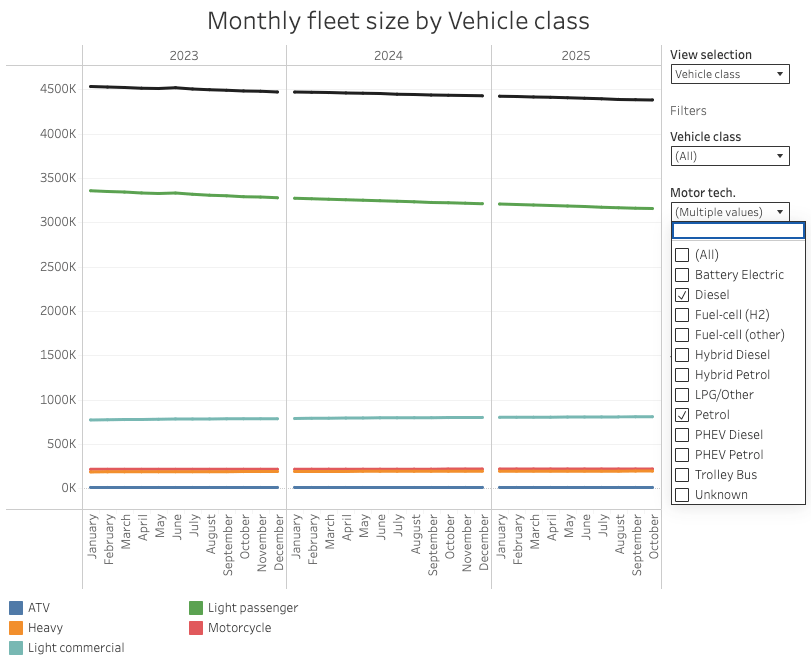
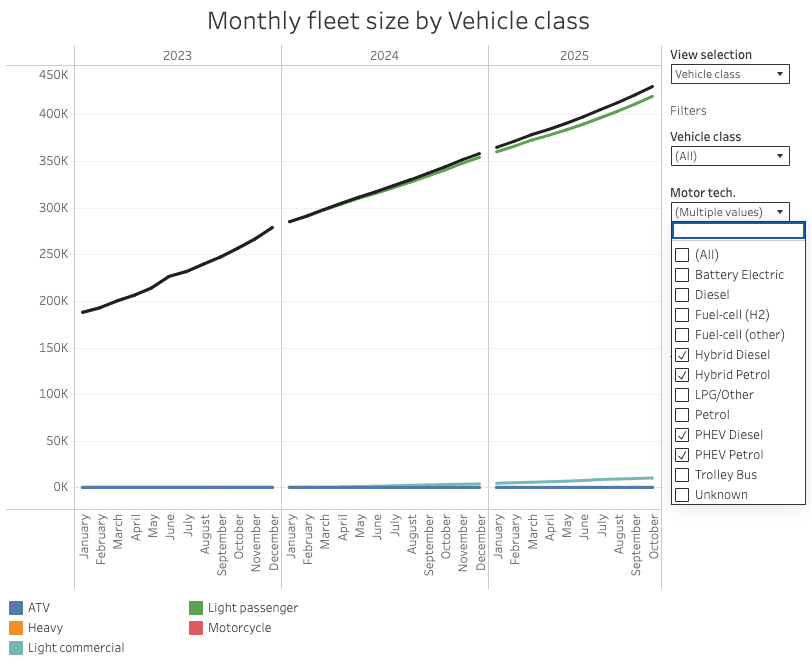

In absolute terms New Zealand’s fleet is still heavily dominated by ICE vehicles and its EV adoptions remains one of the lowest in the world. Currently there are roughly 91000 BEVs in NZ making up barely 1.8% of its total fleet of 4.9 million vehicles.
Sources:
1 News – https://www.1news.co.nz/2025/11/17/clean-car-standard-under-review-import-charges-lowered/
New Zealand Legislation – https://www.legislation.govt.nz/regulation/public/2022/0285/latest/LMS773853.html
New Zealand Transport –https://www.transport.govt.nz/statistics-and-insights/fleet-statistics/sheet/monthly-mv-fleet
New Zealand Transport Agency – https://nzta.govt.nz/vehicles/clean-car-programme/clean-car-standard


Leave a comment